Tag Archives: Symposium

Cooperative and environmental effects in catalysts

2008 Spring Symposium

 
Harold H. Kung
Chem­i­cal and Bio­log­i­cal Engi­neer­ing Depart­ment
North­west­ern Uni­ver­si­ty, Evanston
IL 60208–3120, USA


Abstract — In nature, enzymes func­tion effec­tive­ly under mild con­di­tions of near neu­tral pHand room tem­per­a­ture using com­mon organ­ic func­tion­al groups such as amines,hydroxyls, and car­boxylic acids, which, when used out­side the enzyme environment,exhibit activ­i­ties many orders of mag­ni­tude low­er. It is under­stood that the enzymepro­tein pro­vides an envi­ron­ment that is con­ducive to coop­er­a­tive effect among the group­sand hydropho­bic­i­ty at the active cen­ter. In con­trast, catal­y­sis in abi­ot­ic sys­tems sel­do­mu­ti­lized such func­tions, espe­cial­ly het­ero­ge­neous catal­y­sis. Instead, they rely on harshre­ac­tion con­di­tions of ele­vat­ed tem­per­a­tures and pres­sures, and/or strong acids and bases,with the con­se­quence of sac­ri­fic­ing selec­tiv­i­ty. Recent­ly, advances in cat­a­lyst syn­the­sistech­niques make it increas­ing­ly pos­si­ble to design and syn­the­size abi­ot­ic sys­tems that­pos­sess mul­ti­ple func­tion­al­i­ties to achieve coop­er­a­tive catal­y­sis.

Exam­ples include­co­op­er­a­tive acid-base catal­y­sis in which a Lewis acid and a basic func­tion are anchore­don a sil­i­ca sur­face, includ­ing SBA-15 and coor­di­nat­ed met­al ions on the periph­ery of aden­drimer. We have inves­ti­gat­ed using nanocage struc­tures to exam­ine the effect ofen­vi­ron­ment and dis­cov­ered evi­dence of the “pKa shift” effect of amines groups insid­e­the cage, pri­mar­i­ly due to elec­tro­sta­t­ic repul­sion. These and oth­er exam­ples will bedis­cussed.

Speaker’s Biog­ra­phy — Dr. Kung is Pro­fes­sor at the Depart­ment of Chem­i­cal and Bio­log­i­calEngi­neer­ing, and Direc­tor of the Cen­ter for Ener­gy Effi­cient Trans­porta­tion atNorth­west­ern Uni­ver­si­ty. His research goal is to search for and devel­op the under­ly­ing­chem­i­cal and engi­neer­ing prin­ci­ples gov­ern­ing catal­y­sis, espe­cial­ly regard­ing activ­i­ty and­prod­uct selec­tiv­i­ty, and to make use of such knowl­edge to design nov­el and effi­cient­cat­a­lysts and process­es.

Search for a better water gas shift catalyst

2008 Spring Symposium

 
Luis Boll­mann, Joshua L. Ratts, W. Damion Williams, Jorge Pazmino,Jeffrey T. Miller1, W. Nicholas Del­gass, Fabio H. Ribeiro
School of Chem­i­cal Engi­neer­ing
Pur­due Uni­ver­si­ty
480 Sta­di­um Mall Dri­ve
West Lafayette, IN 47907–2100

1BP Research Cen­ter
E-1F, 150 W.Warrenville Rd.
Naperville, IL 60563


Abstract — We are attempt­ing to syn­the­size a cat­a­lyst for the WGS reac­tion that has the high­turnover rate (TOR) of the Cu-based sys­tem and the capa­bil­i­ty typ­i­cal of noble met­al­sys­tems to recov­er from oper­a­tional upsets. The kinet­ic mea­sure­ments were car­ried out­at 300 °C, 1 bar, 6.8% CO, 22% H2O, 8.5% CO2, 37.3% H2, and bal­ance Argon. As aref­er­ence, the TOR for a Cu based cat­a­lyst at these con­di­tions was about 2 s-1. Wes­t­ud­ied cat­a­lysts based on Pd and Pt. For Pt on alu­mi­na, par­ti­cle size (2–15 nm) caused­no change in the TOR, which was about 1 s-1 for Pt on CeO2, TiO2, and ZrO2 supports,implying that these sup­ports do not influ­ence the reac­tiv­i­ty.

How­ev­er, cat­a­lysts sup­port­e­don sil­i­ca and alu­mi­na showed a TOR about 10 times low­er than those on these three­sup­ports. The addi­tion of, for exam­ple, Mo, Fe, and Zn to Pd and Pt cat­a­lysts on alu­mi­nasig­nif­i­cant­ly increased the rate (up to a fac­tor of 100), but only up to the rate on the non­in­ter­act­ing­sup­ports. The rates of Pd and Pt cat­a­lysts sup­port­ed on the non-inter­act­ing­sup­ports CeO2, TiO2, and ZrO2 could not be fur­ther increased by any of these additives.For a series of Pd-Zn cat­a­lysts rang­ing from 2 to 19 wt% Zn on Al2O3, it was observed byEX­AFS and DRIFTS of CO that Pd alloyed with Zn, and that the alloy exhib­it­ed anin­creased TOR of up to 20 times as com­pared to Pd on Al2O3. The pres­ence of zin­ca­lu­mi­nate was also observed. The addi­tion of 2 wt% Zn to Pd cat­a­lysts sup­port­ed onTiO2, CeO2 and ZrO2 did not enhance the WGS rate, although alloy­ing was ver­i­fied byEX­AFS and DRIFTS of CO. The TORs of Pd on these three sup­ports were as high as theTOR on the best PdZn on alu­mi­na. One expla­na­tion of the results is that Zn forms ana­lu­mi­nate and pre­vents a dele­te­ri­ous inter­ac­tion between Pd and alu­mi­na. Zinc is thus­not a true pro­mot­er for WGS, although it decreased the unde­sir­able metha­na­tion reac­tion­to below detec­tion lim­its. While we have found ways to mit­i­gate the dele­te­ri­ous effect­sof alu­mi­na and sil­i­ca on the WGS rate, we have not yet found a pro­mot­er that will­increase the TOR sig­nif­i­cant­ly for Pd or Pt on non-inter­act­ing sup­ports.

Speaker’s BioBiog­ra­phy — Dr. Ribeiro is Pro­fes­sor at the School of Chem­i­cal Engi­neer­ing, Pur­due­U­ni­ver­si­ty. His research inter­est is in kinet­ics of het­ero­ge­neous cat­alyt­ic processes.Before start­ing on acad­e­mia, Dr. Ribeiro has worked in indus­try and in research using­mod­el cat­a­lysts and sur­face sci­ence tech­niques.

Molecular Basket Sorbents as a Novel Approach to CO2 Capture and Separation

2008 Spring Symposium

 
Chun­shan Song
Direc­tor, EMS Ener­gy Insti­tute and Pro­fes­sor of Fuel Sci­ence
Depart­ment of Ener­gy and Min­er­al Engi­neer­ing
The Penn­syl­va­nia State Uni­ver­si­ty
209 Aca­d­e­m­ic Projects Build­ing
Uni­ver­si­ty Park, PA 16802, USA
Tel: 814–863-4466

csong@​psu.​edu

Abstract — This lec­ture will begin with an overview of ener­gy-relat­ed cap­ture, sequestration,conversion, and uti­liza­tion of car­bon diox­ide (CO2) [C.S. Song, Catal. Today, 115 (2006)2–32]. Car­bon cap­ture and seques­tra­tion (CCS) is con­sid­ered as one of the key options for mit­i­gat­ing the emis­sions of CO2 from ener­gy sys­tems. Accord­ing to stud­ies by U.S. Depart­ment of Ener­gy, CO2 cap­ture by cur­rent com­mer­cial tech­nol­o­gy using aque­ous solu­tions of liq­uid alka­nolamines is ener­gy inten­sive and con­tributes to as much as two thirds of the total cost for CO2 seques­tra­tion. We have pro­posed a new design con­cept of “mol­e­c­u­lar bas­ket sor­bent (MBS)” as a nov­el approach to CO2 cap­ture and sep­a­ra­tion using selec­tive sol­id sor­bent [X. Xu et al., Micro­p­or. Meso­por. Materi., 62 (2003) 29–45]. CO2 “mol­e­c­u­lar bas­ket” is nano-porous, CO2-selec­tive high-capac­i­ty sor­bent for adsorp­tion sep­a­ra­tion of CO2 from var­i­ous gas mix­tures.

We have explored a num­ber of new MBS for­mu­la­tions. An exam­ple of the MBS-CO2 is a nano-porous com­pos­ite of poly­eth­yl­eneimine and a meso­porous moec­u­lar sieve MCM-41. PEI-MCM-41 type sor­bents have been found to be effec­tive for remov­ing CO2 from flue gas and oth­er gas streams with high capac­i­ty and selec­tiv­i­ty at 20–100 °C under atmos­pher­ic pres­sure. The CO2 adsorp­tion capac­i­ty and CO2 sep­a­ra­tion selec­tiv­i­ty of MCM-41 were great­ly improved by load­ing PEI into its nano-sized pore chan­nels (about 3 nm), which made the result­ing sor­bent oper­at­ing like a “mol­e­c­u­lar bas­ket” for CO2 (MBS-CO2). The influ­ence of mois­ture con­cen­tra­tions in the sim­u­lat­ed flue gas on the CO2 adsorp­tion sep­a­ra­tion per­for­mance was also exam­ined. CO2 adsorp­tion capac­i­ty of the MCM-41-PEI adsor­bent for the sim­u­lat­ed moist flue gas was high­er than that for the sim­u­lat­ed dry flue gas. The cap­tured CO2 can be eas­i­ly and com­plete­ly recov­ered by using a purge gas or a vac­u­um sys­tem at 75–100 °C. The mul­ti-cycle exper­i­ments have shown that the MBS-CO2sor­bents have very good regen­er­a­bil­i­ty and sta­bil­i­ty [C. S. Song et al., Stud. Surf, Sci.Catal., 153 (2004) 411–416]. With the MBS, CO2 cap­ture from flue gas can be con­duct­ed in a sol­vent-free and com­pact sol­id sor­bent sys­tem more ener­gy effi­cient­ly, eco­nom­i­cal­ly and envi­ron­men­tal­ly friend­ly. The MBS-CO2 con­cept has also been found applic­a­ble to cap­ture and sep­a­ra­tion of hydro­gen sul­fide H2S in gas mix­tures [X.Wang et al., Green Chem­istry, 9 (2007) 695–702]. Results of ana­lyt­i­cal char­ac­ter­i­za­tion of MBS will also bedis­cussed to shed light on why and how these nov­el sor­bents work under real­is­tic con­di­tions.

Speaker’s Biog­ra­phy — Dr. Chun­shan Song is a Pro­fes­sor of Fuel Sci­ence and the Direc­tor of the EMS Ener­gy Insti­tute at the Penn­syl­va­nia State Uni­ver­si­ty. His research inter­ests include catal­y­sis and adsorp­tion for fuel pro­cess­ing, adsorp­tion desul­fu­r­iza­tion of fuels and reform­ing of hydro­car­bons and bio­fu­els for fuel cells, shape-selec­tive catal­y­sis for chem­i­cals, CO2 cap­ture and uti­liza­tion, heavy oil upgrad­ing, and con­ver­sion of coal and bio­mass to liq­uid fuels and chem­i­cals.

Automotive Emission Control: Past, Present and Future

2008 Spring Symposium

 
Robert J. Far­rauto
Research Fel­low
BASF Cat­a­lysts
Iselin, New Jer­sey
Bob.​Farrauto@​BASF.​com

Adjunct Pro­fes­sor, Earth and Envi­ron­men­tal Engi­neer­ing
Colum­bia Uni­ver­si­ty
City of New York


Abstract — The first auto­mo­bile cat­a­lysts, for gaso­line fueled inter­nal com­bus­tion engines(IC) were intro­duced in 1975. They were designed to facil­i­tate the reduc­tion of car­bon­monox­ide (CO) and unburned gaso­line derived hydro­car­bons (HC). The cat­a­lyst had tocon­tin­ue to func­tion with a approx­i­mate reduc­tion of 90% (rel­a­tive to an uncontrolled1970 vehi­cle) for 50,000 miles. The auto­mo­bile indus­try was skep­ti­cal since the suc­ces­sof the cat­a­lyst was depen­dent on the dri­ving and main­te­nance cycles of the aver­age­con­sumer. Since that time we have seen one of the most suc­cess­ful appli­ca­tions ofcatal­y­sis for clean­ing emis­sions from IC engines includ­ing gaso­line, diesel, two and 4cycle engines, pow­er plants, chem­i­cal plants, restau­rants, and wide body air­craft to namea few. Today we see the three way cat­a­lyst (TWC) as the heart of a closed loop enginecon­trol strat­e­gy suc­cess­ful­ly reduc­ing emis­sions of CO, HC and oxides of nitro­gen (NOx)to near zero for 150,000 miles. This has clear­ly been an achieve­ment of epic pro­por­tion­swith a pos­i­tive impact on the envi­ron­ment and the health of the world.

Now cat­alyt­ic sci­en­tists and engi­neers are faced with new chal­lenges for­con­trol­ling diesel engine emis­sions for trucks, bus­es and pas­sen­ger cars. As we approach2010 Fed­er­al Stan­dard emis­sions of CO, HC, NOx and par­tic­u­lates must approach zerolevels. This is still not the end because we are now see­ing the emer­gence ofen­vi­ron­men­tal emis­sion con­trol with the need to uti­lize more renew­able sources oftrans­porta­tion fuels. Catal­y­sis is already tak­ing on the chal­lenges of gen­er­at­ing alter­na­tivesources of ener­gy while pre­serv­ing the world’s envi­ron­ment.

Today’s talk will pro­vide a brief his­to­ry of some of the accom­plish­ments incon­trol­ling emis­sions from the gaso­line and diesel engines and point to alter­na­tivetech­nolo­gies under inves­ti­ga­tion includ­ing advanced NOx reduc­tion tech­nolo­gies, newengine con­cepts and the fuel cell as the end game in the hydro­gen econ­o­my.

Speaker’s Biog­ra­phy — Dr. Far­rauto is a Research Fel­low at the Cor­po­rate Research­Lab­o­ra­to­ries of BASF Cat­a­lysts (for­mer­ly Engel­hard) in Iselin, New Jer­sey, USA. His­ma­jor respon­si­bil­i­ties have includ­ed the devel­op­ment of advanced auto­mo­bile emis­sion­con­trol cat­a­lysts and cat­a­lysts for the chem­i­cal indus­try. He man­aged an Engel­hardresearch team that devel­oped and com­mer­cial­ized diesel oxi­da­tion cat­a­lysts for theEu­ro­pean, North Amer­i­can and Asian mar­kets for pas­sen­ger cars and heavy duty trucks.Currently he man­ages a research team devel­op­ing new cat­a­lyst tech­nol­o­gy for the­hy­dro­gen econ­o­my includ­ing hydro­gen refu­el­ing sta­tions and fuel cells for stationary,portable pow­er and vehic­u­lar appli­ca­tions. He is also Adjunct Pro­fes­sor in the Earth andEn­vi­ron­men­tal Engi­neer­ing Depart­ment of Colum­bia Uni­ver­si­ty, in the City of NewYork where he teach­es course in catal­y­sis.

Carbon Nanotubes as Heterogeneous Catalyst Supports

2007 Spring Symposium

 
Al Metau­ro
Hype­r­i­on Catal­y­sis Inter­na­tion­al Inc.
Cam­bridge, MA


Abstract — Forms of car­bon have been known and used com­mer­cial­ly as sup­ports for active met­al (and com­pounds of met­al) cat­a­lysts for many years. It has been found that the dis­tinc­tive prop­er­ties of mul­ti-wall car­bon nan­otube aggre­gates can be uti­lized to pre­pare durable sup­ports for slur­ry and fixed bed cat­alyt­ic appli­ca­tions that show enhanced activ­i­ty in select­ed reac­tions. The activ­i­ty ben­e­fits from the high lev­el of poros­i­ty in the meso­pore range found in the sup­port struc­ture and the fact that the active cat­alyt­ic met­als can be dis­persed effi­cient­ly through­out the car­bon nan­otube sup­port. In addi­tion the sup­ports show increased attri­tion resis­tance and strength.

The pre­sen­ta­tion will dis­cuss sev­er­al appli­ca­tions for car­bon nan­otube sup­ports found in the lit­er­a­ture. Data on phys­i­cal prop­er­ties and spe­cif­ic test results for the hydro­gena­tion of cyclo­hex­ene to cyclo­hexa­ne and the hydro­gena­tion of nitroben­zene to ani­line in com­par­i­son with acti­vat­ed car­bon cat­a­lysts will be shown. Hype­r­i­on Catal­y­sis is the lead­ing pro­duc­er of mul­ti-wall car­bon nan­otubes and can sup­ply con­sis­tent com­mer­cial prod­ucts that can add val­ue to many chem­i­cal process­es.

Aqueous Phase Catalytic Upgrading of Biomass to Address Fuels and Chemicals

2007 Spring Symposium

 
Johnathan E. Hol­la­day,* James F. White, John G. Frye, Alan Zach­er, and Todd Wer­py
Pacif­ic North­west Nation­al Lab­o­ra­to­ry
Rich­land, WA 99337 (USA)
*john.​holladay@​pnl.​gov


Abstract — Advances in catal­y­sis are impor­tant endeav­ors to empow­er biore­finer­ies and the use of renew­able feeds. This paper presents the devel­op­ment of effec­tive cat­a­lysts for aque­ous phase pro­cess­ing. The focus of the work will be of hydro­gena­tion and hydrogenol­y­sis and will include exam­ples of upgrad­ing of sug­ar alco­hols (sor­bitol and glyc­erol) and fer­men­ta­tion prod­ucts such as amino acids and diacids into chem­i­cal prod­ucts.

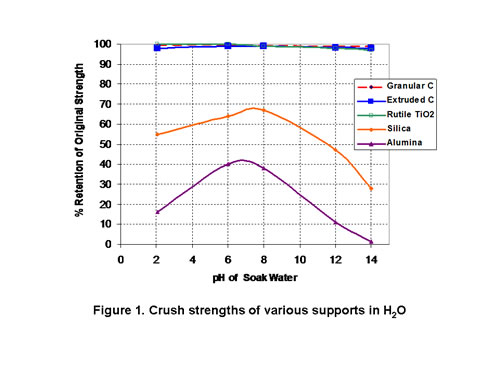
Choice of sup­port has a tremen­dous impact on catal­y­sis per­for­mance and sta­bil­i­ty. We have shown gran­u­lar and extrud­ed car­bon sup­ports to be par­tic­u­lar­ly sta­ble to hydrother­mal con­di­tions as mea­sured by crush strength ver­sus sil­i­ca or alu­mi­na sup­ports (see Fig­ure 1). Rutile Tita­ni­um has also shown high strength. Gran­u­lar car­bons have a very dif­fer­ent pore struc­ture than car­bon extru­dates which can impact cat­a­lyst per­for­mance.

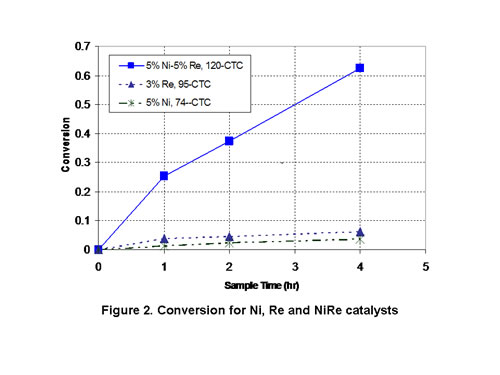
In the exam­ple of upgrad­ing of sug­ar alco­hols the sup­port plays a role on selec­tive adsorp­tion of reagents and prod­ucts. In addi­tion to the sup­port, the inter­ac­tions between nick­el and rhe­ni­um play a piv­otal role in the cat­a­lyst. An extreme exam­ple of the reac­tiv­i­ty dif­fer­ence is shown in Fig­ure 2 (batch con­di­tions, 200 °C, 1200 psig H2). In addi­tion to nick­el and rhe­ni­um we will also dis­cuss results with sil­ver, cop­per, and ruthe­ni­um. Final­ly, using two addi­tion­al sys­tems we will high­light gen­er­al tech­ni­cal chal­lenges drawn from our work with fer­men­ta­tion prod­ucts.

Discovery of CO oxidation and water gas shift catalysts using high throughput reactors

2007 Spring Symposium

 
Chris Brooksa, Stephen Cypesb, Robert K. Gras­sel­lic,d, Alfred Hage­meyerb, Zach Hoganb, Andreas Lesikb, Gui­do Streukensb, Antho­ny F. Volpe Jr.b,*, Howard W. Turn­erb, W. Hen­ry Wein­bergb and Karin Yac­ca­tob
Pre­sent­ed by Joel Cize­ron

Abstract — High-through­put tech­niques and approach­es have been applied to the dis­cov­ery of cat­a­lysts for selec­tive low tem­per­a­ture CO oxi­da­tion and for the water–gas shift (WGS) reac­tion. Mul­ti­ple lev­els of screen­ing were used with increas­ing test com­plex­i­ty as the num­ber of sam­ples decreased due to the elim­i­na­tion of poor-per­form­ing sam­ples and focus­ing on the most promis­ing cat­a­lyst can­di­dates. Pri­ma­ry screens are used for the dis­cov­ery of hits, and quan­ti­ta­tive sec­ondary screens for hit con­fir­ma­tion, lead opti­miza­tion and scale-up.

Nov­el RuCoCe com­po­si­tions were dis­cov­ered and opti­mized for CO oxidation/VOC removal and the effect of met­al pre­cur­sors used and dop­ing was inves­ti­gat­ed for sup­port­ed and bulk mixed oxide cat­a­lysts. For WGS, noble met­al-free and Pt-doped CoFeRu mixed oxides as well as Pt on CeO2 and Pt on CeO2/ZrO2 were inves­ti­gat­ed and a new syn­er­gis­tic PtFeCe ternary com­po­si­tion was dis­cov­ered. Alka­line met­al dop­ing was found to enhance the selec­tiv­i­ty towards WGS by sup­press­ing the uns­e­lec­tive metha­na­tion side reac­tion and to increase the low tem­per­a­ture cat­alyt­ic activ­i­ty.