| 8:00 am | Registration and Continental Breakfast |
| 8:55 am | Opening Remarks |
| 9:00 am | 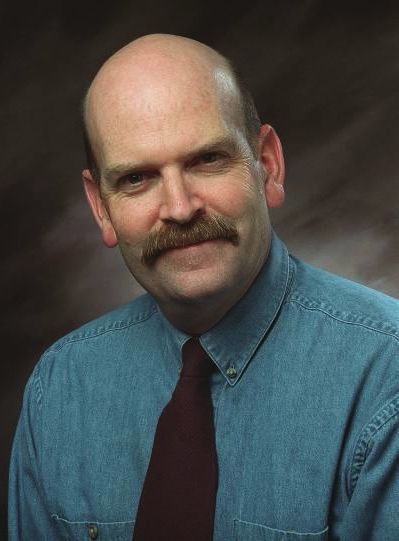 New Insights into the Synthesis of Methanol on Copper New Insights into the Synthesis of Methanol on CopperCharles H. F. Peden, Pacific Northwest National Laboratory Abstract » |
| 9:50 am | 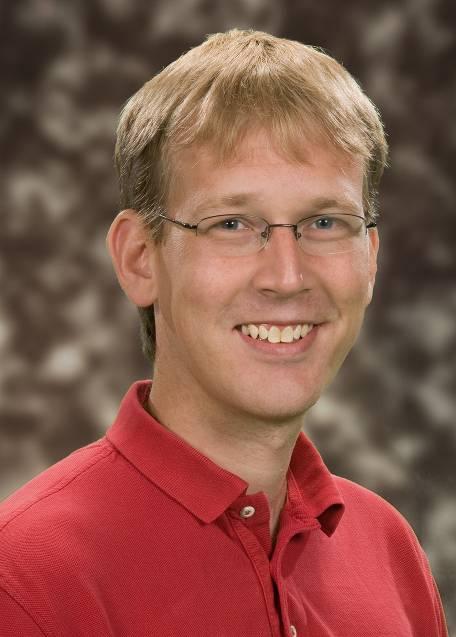 A First Principles View of Reactivity Trends in Heterogeneous Catalysis and Electrocatalysis A First Principles View of Reactivity Trends in Heterogeneous Catalysis and ElectrocatalysisJeffrey Greeley, Purdue University Abstract » |
| 10:40 am | Coffee Break |
| 11:00 am |  Supported Catalysts: Does Surface Roughness Matter? A Case Study With VOx-SBA-15 Supported Catalysts: Does Surface Roughness Matter? A Case Study With VOx-SBA-15Michael A. Smith, Villanova University Abstract » |
| 11:50 am |  Nonaqueous Strategies to Manipulate the Morphology, Phase, and Photocatalytic Activity of Monodisperse TiO2 Nanocrystals Nonaqueous Strategies to Manipulate the Morphology, Phase, and Photocatalytic Activity of Monodisperse TiO2 NanocrystalsThomas R. Gordon, University of Pennsylvania — CCP Student Poster Competition winner Abstract » |
| 12:10 pm | Lunch Buffet |
| 1:10 pm | 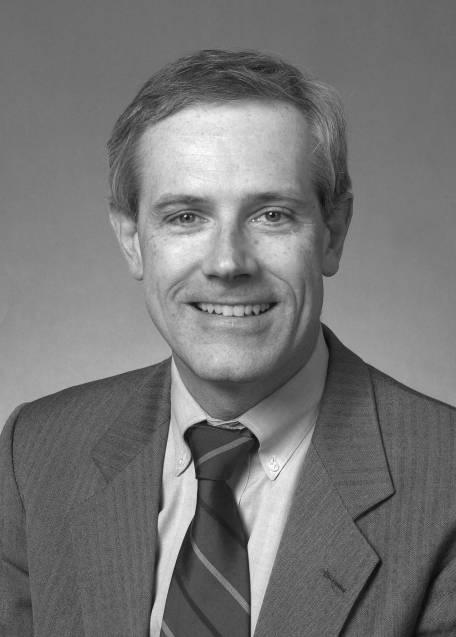 Catalysis in a Pocket: The MCM-22 Story Catalysis in a Pocket: The MCM-22 StoryThomas F. Degnan, Jr., ExxonMobil — 2012 Ciapetta Award Lecture Abstract » |
| 2:10 pm | 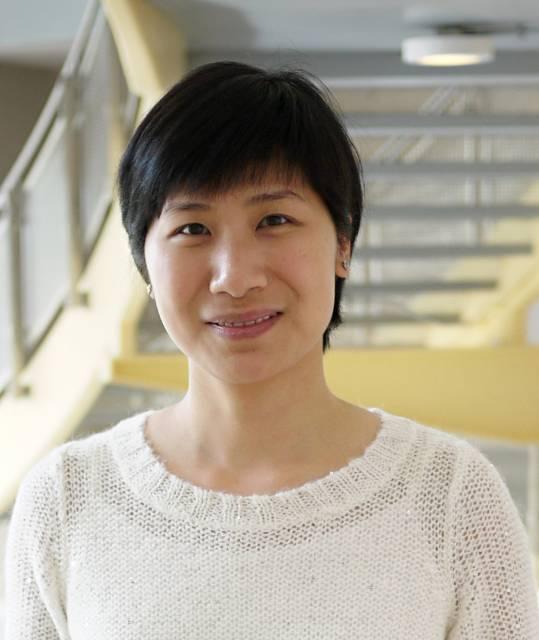 Catalytic Characterization of Hierarchical Meso-/microporous Lamellar Zeolite Catalysts Catalytic Characterization of Hierarchical Meso-/microporous Lamellar Zeolite CatalystsDongxia Liu, University of Maryland — College Park Abstract » |
| 3:00 pm | Announcement of 2013 Catalysis Club of Philadelphia Award Winner |
| 3:05 pm | Coffee Break |
| 3:20 pm | 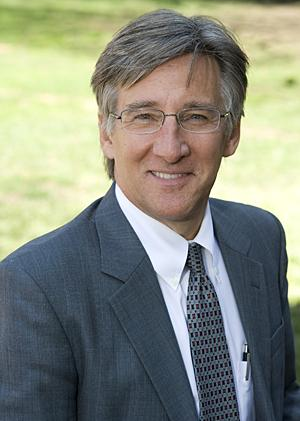 Software Tools for the Construction of Detailed Kinetic Models Software Tools for the Construction of Detailed Kinetic ModelsMichael T. Klein, University of Delaware Abstract » |
| 4:10 pm |  Polar substrates and nonstoichiometric surfaces: Polar substrates and nonstoichiometric surfaces:new routes to active and controllable heterogeneous catalysts Andrew M. Rappe, University of Pennsylvania Abstract » |
| 5:00 pm | Closing Remarks |
Author Archives: Edrick Morales
2012 — 2013 Officers
Chair
Bjorn Moden
Zeolyst International
Bjorn Moden
Zeolyst International
Chair-Elect
Carl Menning
DuPont
Carl Menning
DuPont
Past Chair
Joe Fedeyko
Johnson Matthey
Joe Fedeyko
Johnson Matthey
Treasurer
Haiying Chen
Johnson Matthey
Haiying Chen
Johnson Matthey
Secretary
Anton Petushkov
Zeolyst International
Anton Petushkov
Zeolyst International
Program Chair
Yaritza Lopez
Johnson Matthey
Yaritza Lopez
Johnson Matthey
Arrangements Chair
Jacob Weiner
University of Delaware
Jacob Weiner
University of Delaware
Director Sponsorship
Charles Coe
Villanova University
Charles Coe
Villanova University
Director Membership
Parag Shah
PQ Corporation
Parag Shah
PQ Corporation
Director Poster Session
Vladimiros Nikolakis
University of Delaware
Vladimiros Nikolakis
University of Delaware
Webmaster
Edrick Morales
Edrick Morales
Representative to NACS
Anne Gaffney
INVISTA
Anne Gaffney
INVISTA
Daniel Resasco is the recipient of the 2013 Catalysis Club of Philadelphia Award
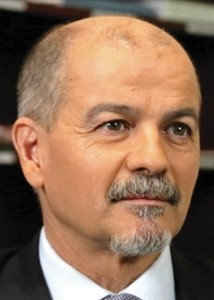 The Catalysis Club of Philadelphia is pleased to announce Dr. Daniel Resasco as the recipient of the 2013 Catalysis Club of Philadelphia Award, in recognition of his many contributions related to supported metal and solid acid catalysis, hydrocarbon conversion, nanotube synthesis, and biomass-derived compound upgrading.
Prof. Resasco obtained his PhD in chemical engineering from Yale University in 1983 under the direction of Gary Haller. While at Yale, he co-authored a seminal work explaining strong metal-support interactions on Rh/TiO2 catalysts that subsequently became a Current Contents Citation Classic. After graduation from Yale, he joined the chemical engineering department of the National University of Mar del Plata, Argentina, eventually serving as department chair. In 1991 he returned to the US as Senior Scientist at the Sun Company, and in 1993 he joined the School of Chemical, Biological and Materials Engineering at the University of Oklahoma where he is now the George Lynn Cross Research Professor and Douglas & Hilda Bourne Chair of Chemical Engineering.
Prof. Resasco’s research in heterogeneous catalysis has always aimed at important applications, but has been strongly grounded in fundamentals of structure-property relationships and characterization of catalysts and mechanisms. Initially, his research program examined strong solid acid catalysis and supported metal catalysis for hydrocarbon processing. In the late 90s, Resasco’s group began investigation of heterogeneous catalytic synthesis of single-wall carbon nanotubes, discovering that careful control of the catalyst nanostructure enabled unprecedented chiral selectivity in the nanotubes.
Their work led to the patented CoMoCat process, capable of scaleup to industrial production, and a spinoff company, SouthWest NanoTechnologies. More recently, Resasco’s work on upgrading of biomass-derived compounds led to the development of Janus nanoparticle catalysts which simultaneously stabilize high interfacial area emulsions and carry out upgrading reactions in both the aqueous and organic phases. This work was initially reported in Science in January, 2010.
Prof. Resasco has authored well over 200 archival journal articles which have been cited over 8,000 times, 32 industrialpatents, and over 120 invited lectures. From 2001 – 2007 Resasco also served as associate editor of the Journal of Catalysis.
Prof. Resasco will be honored with a plaque an honorarium ($1000) during his award presentation at the Catalysis Club of Philadelphia’s monthly meetings in the upcoming 2013–2014 season.
Catalysis Club of Philadelphia — Announcement of Election Results
The elections for the 2013–2014 season of the Catalysis Club of Philadelphia (CCP) were held on April 18, 2013.
The newly elected officers to the CCP Executive Committee are:
- Chair-Elect: Vladimiros Nikolakis
- Treasurer: Steve Harris
- NACS Representative: Anne Gaffney
- Directors
- Yaritza Lopez
- Parag Shah
- Alejandra Rivas-Cardona
The proposal to amend BY–LAW IV — Officers, section 5 to include the position of Webmaster among the appointed positions was approved. The complete CCP by-laws are available at catalysisclubphilly.org/about/by-laws.
Seventh World Congress on Oxidation Catalysis
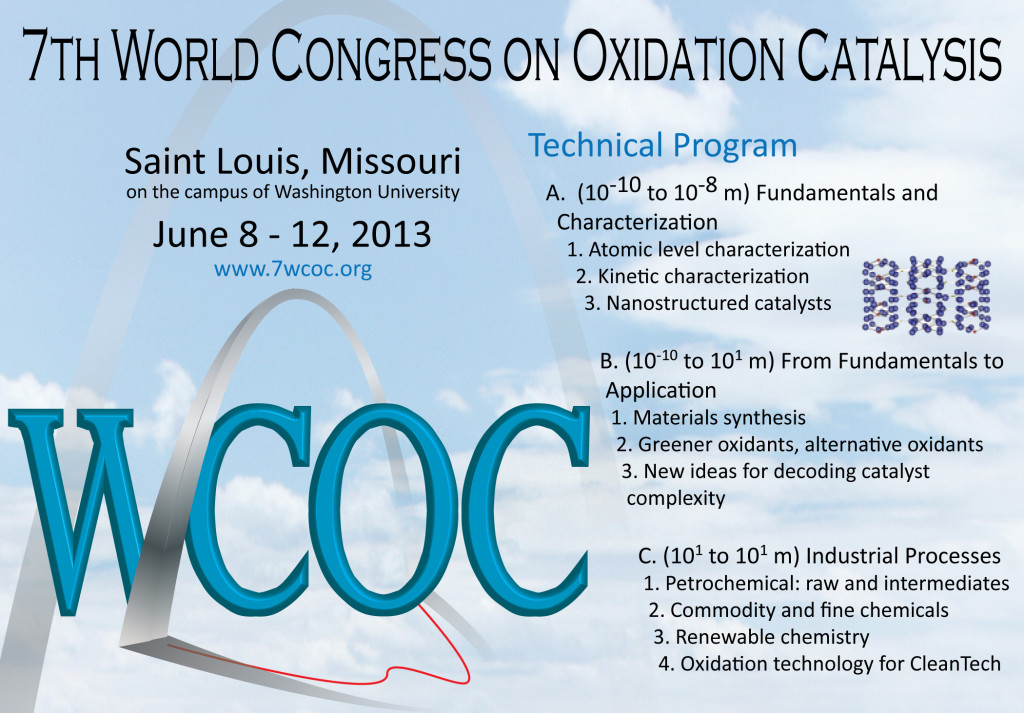 The 7th World Congress on Oxidation Catalysis aims to focus on the understanding of catalytic oxidation phenomena across time and length scales, taking together the fundamental phenomena that is most often the focus of academia with the processes and applications that drive industry. The session titled From Fundamentals to Application includes existing and nascent topics that bridge fundamental understanding to current and emerging technologies. For example, materials/catalyst preparation and design topics address the multifunctional nature inherent in oxidation process catalysts. Emerging alternative or “green” oxidants can be used in both heterogeneous and homogeneous processes to benefit selectivity. Chemical looping processes promise to eliminate the primary source of nitrogen oxides.
A new session format is included with the goal of presenting new ideas and methodologies for decoding the complexity inherent in catalysis and catalytic processes. Presenters are encouraged to discuss exciting combinations of theory and experiment and the combination of multiple experimental techniques. Presentations will be scheduled early in the program with a discussion workshop to generate consensus on the current state and direction of the field.
The oxidative catalytic applications important to industry in a great sense drive the fundamental work discussed above. The petrochemical processes focused on syngas generation/conversion, combustion, partial and selective oxidation, amines and C1 chemistry, along with processes for biomass conversion to fuels will be presented. Fine chemical and pharmaceutical production that generally employ homogeneous oxidations are covered among the subtopics of olefin and aromatic oxidation, epoxidation and the chemistry of radical species. Finally, the contribution of catalysis to environmental technologies such as VOC oxidation, wastewater treatment and autoexhaust catalysis will be presented.
The Congress begins with a full day on Sunday, June 9th, and lasts through Wednesday June 12th. It will be held in Saint Louis, Missouri on the campus of Washington University. With Washington University acting as host the Congress is made quite economical and many will find the registration prices coupled with the availability of campus housing a pleasant surprise. The Congress dinner will be on Tuesday, June 11 and a group excursion to the top of the Gateway Arch will take place on Wednesday, June 12. For more information about the 7th World Congress, visit www.7wcoc.org.
Polar Substrates and Nonstoichiometric Surfaces: New Routes to Active and Controllable Heterogeneous Catalysts
2013 Spring Symposium
Andrew M. Rappe
Pennergy Co-Director
Department of Chemistry
University of Pennsylvania
Philadelphia, PA 19104
rappe@sas.upenn.edu
Abstract — The quest to design surfaces with useful catalytic activity has received a dramatic boost from modern techniques of oxide epitaxial growth and characterization. This unprecedented experimental control of oxide surfaces opens great opportunities to design new catalysts using theory and modeling. In this talk, I will describe a variety of new approaches for tailoring surface properties by controlling oxide composition and structure, before focusing on two specific examples. 1. Polar oxides show structural deformations that change the structure and composition of surfaces. 2. Annealing complex oxides can lead to surface reconstructions with compositions different from any bulk material. These techniques lead to surfaces with undercoordinated transition metal cations that should offer novel reactivity.
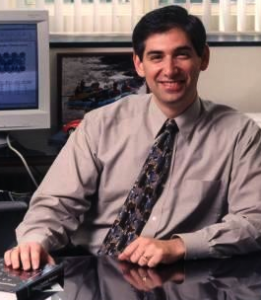
Andrew M. Rappe
Andrew received an NSF CAREER award in 1997, an Alfred P. Sloan Research Fellowship in 1998, and a Camille Dreyfus Teacher-Scholar Award in 1999. He was named a Fellow of the American Physical Society in 2006.
Andrew is one of the two founding co-directors of Pennergy: the Penn Center for Energy Innovation. He is also one of the founding co-directors of the VIPER honors program at Penn, the Vagelos Integrated Program in Energy Research.
His current research interests revolve around ferroelectric phase transitions in oxides, surface chemistry and catalysis of complex oxides, and the interplay between the two: a) He helped establish relationships between composition and ferroelectric phase transition temperature in bismuth-containing perovskites oxides, b) He predicted that changing chemical vapor composition above a ferroelectric oxide could reorient its polarization, c) He revealed the mechanism of domain wall motion in ferroelectric oxides, d) He showed that changing ferroelectric polarization dramatically changes catalytic activity of supported metal films and nanoparticles, and e) He uses computational materials design to invent new ferroelectric photovoltaics for solar applications.
Software Tools for the Construction of Detailed Kinetic Models
2013 Spring Symposium
Michael T. Klein
Director, University of Delaware Energy Institute
Dan Rich Chair of Energy
Department of Chemical Engineering
University of Delaware
Newark, DE 19716
mtk@udel.edu
Abstract — The world-wide energy transportation sector is almost entirely dependent on petroleum, a remarkable resource on which a highly sophisticated refining and vehicle infrastructure has grown. Given the capital value of the existing world-wide refining and transportation infrastructures, and the decadal characteristic time for their change, it is likely that carbon-based resources, including unconventional feedstocks that will be upgraded for use with petroleum in the existing infrastructure, will be utilized for decades to come. Mathematical models of the chemistry of their upgrading and conversion will assist the commercial realization of these possibilities.
The considerable interest in molecule-based models of these chemistries is motivated by the need to predict both upstream and downstream properties. This is because the molecular composition is an optimal starting point for the prediction of mixture properties. The challenge of building these models is due to the staggering complexity of the complex reaction mixtures. There will often be thousands of potential molecular and intermediate (e.g., ions or radicals) species. Clearly, the use of the computer to not only solve but also formulate the model would be helpful in that it would allow the modeler to focus on the basic chemistry, physics and approximations of the model.
Our recent work has led to the development of an automated capability to model development. Statistical simulation of feedstock structure casts the modeling problem in molecular terms. Reactivity information is then organized in terms of quantitative linear free energy relationships. The model equations are then built and coded on the computer. Solution of this chemical reaction network, in the context of the chemical reactor, provides a prediction of the molecular composition, which is then organized into any desired commercially relevant outputs. Of particular note is the Attribute Reaction Model approach that is useful when the number of desired components in the molecular mixture is constrained by the practical limits of hardware and software.
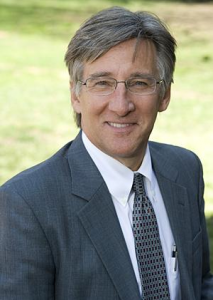
Michael T. Klein
Professor Klein received a BChE from the University of Delaware in 1977 and a Sc. D. from MIT in 1981, both in Chemical Engineering. The author of over 200 technical papers and the lead author of the text Molecular Modeling in Heavy Hydrocarbon Conversions, he is active in research in the area of chemical reaction engineering, with special emphasis on the kinetics of complex systems. He is the Editor-in-Chief of the ACS journal Energy and Fuels and has received the R. H. Wilhelm Award in Chemical Reaction Engineering from the AIChE, the NSF PYI Award and the ACS Delaware Valley Section Award. In 2011 Professor Klein was elevated to the level of Fellow of the ACS.