April 2019
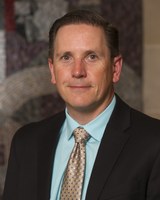 Prof. William Schneider,
University of Notre Dame, Department of Chemical and Biomolecular Engineering
Concurrent Professor, Department of Chemistry and Biochemistry
The chemistry of nitrogen is inextricably linked with humanity’s use of energy. Industrial nitrogen fixation (N2 NH3) revolutionized the production of fertilizer and enabled the population explosion of the 20th century, consuming several percent of the world’s energy annually in the process. NOX reduction (NOX N2) is integral to reducing the adverse impacts of automobile use on urban air quality and health. These and other successful technologies all depend at their heart on heterogeneous catalysis. In this presentation, I will discuss the insights we have gained by applying molecular-level models and concepts to nitrogen catalytic chemistry. Examples will be drawn from our work on the selective catalytic reduction of NOX, a problem that has led us to rethink the factors that govern reactivity in zeolites, from NO and NH3 oxidation, problems that have caused us to revisit how we model reactions at metal surfaces, and from N2 reduction, where we are exploring the potential to bypass the constraints imposed by mother nature on the performance of conventional catalysts.