Author Archives: Edrick Morales

Carbon Nanotubes as Heterogeneous Catalyst Supports

2007 Spring Symposium

 
Al Metau­ro
Hype­r­i­on Catal­y­sis Inter­na­tion­al Inc.
Cam­bridge, MA


Abstract — Forms of car­bon have been known and used com­mer­cial­ly as sup­ports for active met­al (and com­pounds of met­al) cat­a­lysts for many years. It has been found that the dis­tinc­tive prop­er­ties of mul­ti-wall car­bon nan­otube aggre­gates can be uti­lized to pre­pare durable sup­ports for slur­ry and fixed bed cat­alyt­ic appli­ca­tions that show enhanced activ­i­ty in select­ed reac­tions. The activ­i­ty ben­e­fits from the high lev­el of poros­i­ty in the meso­pore range found in the sup­port struc­ture and the fact that the active cat­alyt­ic met­als can be dis­persed effi­cient­ly through­out the car­bon nan­otube sup­port. In addi­tion the sup­ports show increased attri­tion resis­tance and strength.

The pre­sen­ta­tion will dis­cuss sev­er­al appli­ca­tions for car­bon nan­otube sup­ports found in the lit­er­a­ture. Data on phys­i­cal prop­er­ties and spe­cif­ic test results for the hydro­gena­tion of cyclo­hex­ene to cyclo­hexa­ne and the hydro­gena­tion of nitroben­zene to ani­line in com­par­i­son with acti­vat­ed car­bon cat­a­lysts will be shown. Hype­r­i­on Catal­y­sis is the lead­ing pro­duc­er of mul­ti-wall car­bon nan­otubes and can sup­ply con­sis­tent com­mer­cial prod­ucts that can add val­ue to many chem­i­cal process­es.

Aqueous Phase Catalytic Upgrading of Biomass to Address Fuels and Chemicals

2007 Spring Symposium

 
Johnathan E. Hol­la­day,* James F. White, John G. Frye, Alan Zach­er, and Todd Wer­py
Pacif­ic North­west Nation­al Lab­o­ra­to­ry
Rich­land, WA 99337 (USA)
*john.​holladay@​pnl.​gov


Abstract — Advances in catal­y­sis are impor­tant endeav­ors to empow­er biore­finer­ies and the use of renew­able feeds. This paper presents the devel­op­ment of effec­tive cat­a­lysts for aque­ous phase pro­cess­ing. The focus of the work will be of hydro­gena­tion and hydrogenol­y­sis and will include exam­ples of upgrad­ing of sug­ar alco­hols (sor­bitol and glyc­erol) and fer­men­ta­tion prod­ucts such as amino acids and diacids into chem­i­cal prod­ucts.

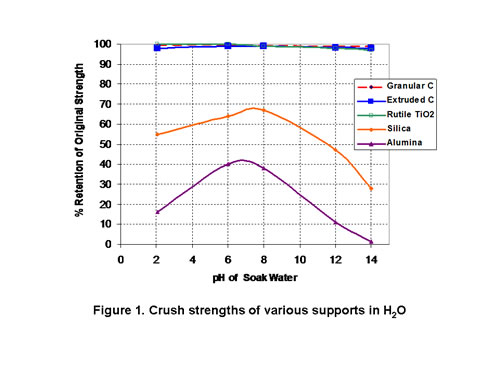
Choice of sup­port has a tremen­dous impact on catal­y­sis per­for­mance and sta­bil­i­ty. We have shown gran­u­lar and extrud­ed car­bon sup­ports to be par­tic­u­lar­ly sta­ble to hydrother­mal con­di­tions as mea­sured by crush strength ver­sus sil­i­ca or alu­mi­na sup­ports (see Fig­ure 1). Rutile Tita­ni­um has also shown high strength. Gran­u­lar car­bons have a very dif­fer­ent pore struc­ture than car­bon extru­dates which can impact cat­a­lyst per­for­mance.

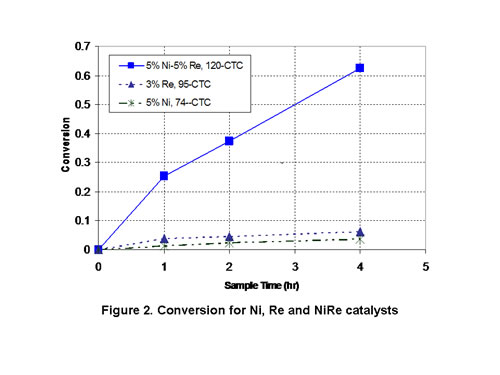
In the exam­ple of upgrad­ing of sug­ar alco­hols the sup­port plays a role on selec­tive adsorp­tion of reagents and prod­ucts. In addi­tion to the sup­port, the inter­ac­tions between nick­el and rhe­ni­um play a piv­otal role in the cat­a­lyst. An extreme exam­ple of the reac­tiv­i­ty dif­fer­ence is shown in Fig­ure 2 (batch con­di­tions, 200 °C, 1200 psig H2). In addi­tion to nick­el and rhe­ni­um we will also dis­cuss results with sil­ver, cop­per, and ruthe­ni­um. Final­ly, using two addi­tion­al sys­tems we will high­light gen­er­al tech­ni­cal chal­lenges drawn from our work with fer­men­ta­tion prod­ucts.

Discovery of CO oxidation and water gas shift catalysts using high throughput reactors

2007 Spring Symposium

 
Chris Brooksa, Stephen Cypesb, Robert K. Gras­sel­lic,d, Alfred Hage­meyerb, Zach Hoganb, Andreas Lesikb, Gui­do Streukensb, Antho­ny F. Volpe Jr.b,*, Howard W. Turn­erb, W. Hen­ry Wein­bergb and Karin Yac­ca­tob
Pre­sent­ed by Joel Cize­ron

Abstract — High-through­put tech­niques and approach­es have been applied to the dis­cov­ery of cat­a­lysts for selec­tive low tem­per­a­ture CO oxi­da­tion and for the water–gas shift (WGS) reac­tion. Mul­ti­ple lev­els of screen­ing were used with increas­ing test com­plex­i­ty as the num­ber of sam­ples decreased due to the elim­i­na­tion of poor-per­form­ing sam­ples and focus­ing on the most promis­ing cat­a­lyst can­di­dates. Pri­ma­ry screens are used for the dis­cov­ery of hits, and quan­ti­ta­tive sec­ondary screens for hit con­fir­ma­tion, lead opti­miza­tion and scale-up.

Nov­el RuCoCe com­po­si­tions were dis­cov­ered and opti­mized for CO oxidation/VOC removal and the effect of met­al pre­cur­sors used and dop­ing was inves­ti­gat­ed for sup­port­ed and bulk mixed oxide cat­a­lysts. For WGS, noble met­al-free and Pt-doped CoFeRu mixed oxides as well as Pt on CeO2 and Pt on CeO2/ZrO2 were inves­ti­gat­ed and a new syn­er­gis­tic PtFeCe ternary com­po­si­tion was dis­cov­ered. Alka­line met­al dop­ing was found to enhance the selec­tiv­i­ty towards WGS by sup­press­ing the uns­e­lec­tive metha­na­tion side reac­tion and to increase the low tem­per­a­ture cat­alyt­ic activ­i­ty.

Highly Active Catalysts for Production of Hydroxylamine

2007 Spring Symposium

 
Jaime R. Blan­ton1*, Taku­ma Hara2, Kon­rad Möbus3 and Baoshu Chen3
1Degus­sa Corporation,5150 Gilbertsville High­way, Calvert City, KY 42029 (USA)
2Degus­sa Japan, Tsuku­ba Mina­mi Dai­ichi Kogyo Danchi, 21 Kasum­i­nosato Ami-machi, Inashi­ki-gun Ibara­ki-ken 300‑0315 (Japan)
3Degus­sa Ag,Rodenbacher Chaussee 4, 63457 Hanau-Wolf­gang (Ger­many)
*jaime.​blanton@​degussa.​com


Abstract — ε-capro­lac­tam is a feed­stock for nylon-6 poly­mers. The demand for ε-capro­lac­tam was 4 mil­lion met­ric tons in 2005. Hydrox­y­lamine (hyam) is a key raw mate­r­i­al for the man­u­fac­ture of ε-capro­lac­tam. The hydrox­y­lamine used in the HPO™ is pro­duced by selec­tive hydro­gena­tion of nitric acid over a Pd/C cat­a­lyst. Degus­sa has done exten­sive work to devel­op Pd/C cat­a­lysts with supe­ri­or activ­i­ty for the pro­duc­tion of hyam (Equa­tion 1).

Equa­tion 1: NO3 + 3H2 + 2H+ NH3OH+ + 2H2O

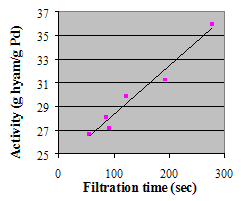
Many para­me­ters influ­ence the per­for­mance of a cat­a­lyst. Our aim was to see how vary­ing the car­bon sup­port, Pd load­ing and Pt addi­tion would affect the activ­i­ty, selec­tiv­i­ty and fil­ter­abil­i­ty of the cat­a­lyst in hopes of iden­ti­fy­ing the opti­mal cat­a­lyst for the hyam reac­tion (activ­i­ty greater than 25 g hyam/g Pd, selec­tiv­i­ty >; 90% and fast fil­tra­tion rate).

Numer­ous cat­a­lysts were pre­pared by sev­er­al dif­fer­ent meth­ods and test­ed for their hyam activ­i­ty. Cat­a­lysts (six in total; A-F) pre­pared using the method that pro­vid­ed the most active cat­a­lysts were used in this study. These cat­a­lysts were each pre­pared by the same pro­pri­etary pro­ce­dure and each con­tains 10% Pd except D which con­tains 9% Pd. In a typ­i­cal test 750 mg of cat­a­lyst was added to a con­tin­u­ous stirred tank reac­tor (1500 rpm) con­tain­ing the nitrate ions in 1L of phos­phate buffer solu­tion. The amount of hyam formed and selec­tiv­i­ty after 90 min at 30 °C were mea­sured by titra­tion. Cat­a­lyst fil­tra­tion rates were mea­sured by pass­ing a slur­ry of buffer solu­tion con­tain­ing 5 g cat­a­lyst through a fil­ter cloth at 0.1 MPa N2 pres­sure.

From this study it is evi­dent that sev­er­al high­ly active hyam cat­a­lysts have been devel­oped for the HPO™ process. Depend­ing on which per­for­mance indi­ca­tor is most impor­tant (activ­i­ty, selec­tiv­i­ty or fil­ter­abil­i­ty) one can select the best Degus­sa cat­a­lyst for their appli­ca­tion.
 
Table 1: Activ­i­ty (g hyam/g Pd) and selec­tiv­i­ty for bimetal­lic cat­a­lysts and cat­a­lysts of vary­ing Pd load­ings.

Cat. Type % Pd % Pt Activ­i­ty Selec­tiv­i­ty
A 9 0 37.2 100
A 10 0 36.0 95.7
A 12 0 32.7 94.6
A 15 0 28.9 98.0
C 12 0 27.7 93.2
C 12 0.1 30.7 92.3
A 12 0.1 35.0 93.3
A 8 2 57.3 86

 
Fig­ure 1: Hyam activ­i­ty vs. fil­tra­tion of cat­a­lysts.

The need for realistic testing in the development of monolithic catalysts for hydrogen generation

2007 Spring Symposium

 
Wolf­gang Ruet­tinger
BASF Cat­a­lysts LLC
101 Wood Avenue
Iselin, NJ 08830 USA
wolfgang.​ruettinger@​BASF.​com


Abstract — In the devel­op­ment of mono­lith­ic cat­a­lysts for hydro­gen pro­duc­tion, one has to devel­op cat­a­lysts with suf­fi­cient activ­i­ty and selec­tiv­i­ty to be com­mer­cial­ly viable. In addi­tion, the cat­a­lyst has to endure the oper­at­ing con­di­tions encoun­tered in fuel proces­sors and have a suf­fi­cient use­ful life­time.

Real­is­tic test pro­to­cols and accel­er­at­ed aging tests play an impor­tant role in deter­min­ing the dura­bil­i­ty of cat­a­lysts. In auto­mo­tive three-way cat­a­lyst, there is a vast data­base of mil­lions of used cat­a­lysts and the preva­lent fail­ure modes were exten­sive­ly stud­ied. This is not the case in fuel proces­sors for hydro­gen pro­duc­tion. With very lim­it­ed field data, we have to design tests which mim­ic the most dam­ag­ing con­di­tions encoun­tered using lab­o­ra­to­ry reac­tors and deter­mine pos­si­ble fail­ure modes.

I will show exam­ples of test pro­to­cols devel­oped at BASF Cat­a­lysts (for­mer­ly Engel­hard). Test­ing of water gas shift cat­a­lysts demon­strate how start-stop oper­a­tions with var­i­ous start-stop cycles can be among the most dam­ag­ing oper­a­tions to the cat­a­lysts. Results of the tests form the basis for trou­bleshoot­ing of cat­a­lysts prob­lems in the appli­ca­tion. Fun­da­men­tal knowl­edge gained dur­ing exam­i­na­tion of cat­a­lysts oper­at­ed in these tests can influ­ence future cat­a­lyst design.

Mechanistic Studies of the Steam Reforming of Methanol on Pd/ZnO Catalysts

2007 Spring Symposium

 
Eseoghene Jero­ro and John M. Vohs
Depart­ment of Chem­i­cal and Bio­mol­e­c­u­lar Engi­neer­ing
Uni­ver­si­ty of Penn­syl­va­nia
Philadel­phia, PA 19104–6393 USA
ejeroro@​seas.​upenn.​edu


Abstract — Methanol and oth­er alco­hols are poten­tial bio-renew­able sources of hydro­gen. The use of alco­hols, how­ev­er, as a source of H2 or for H2 stor­age requires sta­ble reform­ing cat­a­lysts that have high activ­i­ty at low tem­per­a­tures. One such cat­a­lyst that has received much atten­tion for steam reform­ing of CH3OH (SRM) [CH3OH + H2O → CO2 + 3H2] is Pd sup­port­ed on ZnO. Pd/ZnO cat­a­lysts have unusu­al­ly high selec­tiv­i­ty (>;95%) for the pro­duc­tion of CO2 and H2 from methanol, in spite of the fact that bulk Pd exhibits near­ly 100 % selec­tiv­i­ty for the dehy­dro­gena­tion of CH3OH to CO and H2 under typ­i­cal SRM con­di­tions. Iwasa and oth­ers have demon­strat­ed that par­tial alloy­ing of the Pd with Zn is required to obtain a high­ly selec­tive Pd/ZnO SRM cat­a­lyst. While the impor­tance of alloy for­ma­tion has been estab­lished, the mech­a­nism by which Zn alters the selec­tiv­i­ty to pro­duce CO2 rather than CO is not under­stood. Iwasa et al. have pro­posed, how­ev­er, that the dra­mat­ic change in selec­tiv­i­ty may result from the desta­bi­liza­tion of η2-CH2O inter­me­di­ates in which the car­bonyl group is par­al­lel to the sur­face and bond­ing is by both the C and O atoms in favor of η1-CH2O in which the car­bonyl is per­pen­dic­u­lar to the sur­face and only the oxy­gen inter­acts with the met­al. Pre­sum­ably this lat­er species is more resis­tant to dehy­dro­gena­tion and reacts with hydrox­yl groups to pro­duce CO2 and H2.

In order to elu­ci­date how alloy­ing with Zn affects the CH3OH dehy­dro­gena­tion activ­i­ty of Pd, the struc­ture and reac­tiv­i­ty of mod­el cat­a­lysts con­sist­ing of sub­mono­lay­er amounts of Zn sup­port­ed on a Pd(111) sin­gle crys­tal have been inves­ti­gat­ed. I will present tem­per­a­ture pro­grammed des­orp­tion (TPD) data for the reac­tion of methanol and formalde­hyde on Pd(111) as a func­tion of Zn cov­er­age as well as results of a high res­o­lu­tion elec­tron ener­gy loss spec­troscopy (HREELS) study of the bond­ing con­fig­u­ra­tions of CO, CH2O, and CH3OH on Zn/Pd(111) sur­faces. TPD data for the reac­tion of methanol on Pd sup­port­ed on ZnO(0001) sin­gle crys­tal sur­faces will also be pre­sent­ed. The TPD data shows that the for­ma­tion of the Pd Zn alloy severe­ly shuts down the dehy­dro­gena­tion of CH3OH and CH2O which cor­re­sponds to the increase in η1-CH2O seen in the HREELS. Over­all, these results pro­vide fun­da­men­tal insight into how Zn alters the reac­tiv­i­ty of Pd for the dehy­dro­gena­tion of CH3OH and this insight is use­ful in elu­ci­dat­ing the mech­a­nism of the steam reform­ing of methanol on Pd/ZnO cat­a­lysts.

Reforming of Ethylene Glycol and Ethanol for H2 Production on Bimetallic Surfaces

2007 Spring Symposium

 
Orest Sko­plyak, Mark A. Barteau, Carl A. Men­ning and Jing­guang G. Chen
Cen­ter for Cat­alyt­ic Sci­ence and Tech­nol­o­gy
Depart­ment of Chem­i­cal Engi­neer­ing
Uni­ver­si­ty of Delaware, Newark, DE 19716


Abstract — The pro­duc­tion of hydro­gen for use in fuel cells can be achieved by selec­tive reform­ing of oxy­genates. The oxy­genates may be derived from renew­able bio­mass and offer advan­tages such as low tox­i­c­i­ty, low reac­tiv­i­ty and com­pat­i­bil­i­ty with the cur­rent infra­struc­ture for trans­porta­tion and stor­age [1]. Plat­inum has been iden­ti­fied as one of the most promis­ing cat­a­lysts for the reform­ing of oxy­genates. In this study, the reac­tions of oxy­genates, such as eth­yl­ene gly­col and ethanol, were inves­ti­gat­ed on 3d-Pt(111) bimetal­lic sur­faces using tem­per­a­ture-pro­grammed des­orp­tion (TPD), high-res­o­lu­tion elec­tron ener­gy loss spec­troscopy (HREELS), and Den­si­ty Func­tion­al The­o­ry (DFT) mod­el­ing [2].

The exper­i­men­tal­ly mea­sured reform­ing activ­i­ty was cor­re­lat­ed with the d-band cen­ter of the bimetal­lic sur­faces from DFT mod­el­ing and dis­played a lin­ear trend for both eth­yl­ene gly­col and ethanol. The reform­ing activ­i­ty increased as the sur­face d-band cen­ter moved clos­er to the Fer­mi lev­el, oppo­site to the trend pre­vi­ous­ly observed for hydro­gena­tion reac­tions. The mod­el­ing results indi­cate that the bind­ing ener­gy of ethanol should increase as the d-band cen­ter of the bimetal­lic sur­face moves clos­er to the Fer­mi lev­el, which can be achieved by choos­ing 3d met­als from the left side of the peri­od­ic table as the sur­face mono­lay­er. The com­bined DFT mod­el­ing and exper­i­men­tal results enabled us to pre­dict bimetal­lic for­mu­la­tions with enhanced reform­ing activ­i­ty. Fur­ther­more, the sta­bil­i­ty of the 3d-Pt(111) sur­faces in oxy­gen-con­tain­ing envi­ron­ment was also inves­ti­gat­ed to under­stand the pos­si­ble bimetal­lic struc­tures dur­ing reform­ing reac­tions [3]. Over­all, the cor­re­la­tion of activ­i­ty and sta­bil­i­ty with the d-band cen­ter allows us to pre­dict oth­er poten­tial bimetal­lic cat­a­lysts based on the d-band cen­ter val­ues in pre­vi­ous cal­cu­la­tions [4,5].

[1] Shabak­er, J. W.; Dav­da, R. R.; Huber, G. W.; Cor­tright, R. D.; Dumesic, J. A. J. Catal. 2003, 215, 344.
[2] Sko­plyak, O.; Barteau, M. A.; Chen, J. G. J. Phys. Chem. B 2006, 110, 1686.
[3] Men­ning, C.A.; Chen, J. G. J. Phys. Chem. B 2006, 110, 15471.
[4] Kitchin, J. R.; Nørskov, J. K.; Barteau, M. A.; Chen, J. G. J. Chem. Phys. 2004, 120, 10240.
[5] Kitchin, J. R.; Nørskov, J. K.; Barteau, M. A.; Chen, J. G. Phys. Rev. Lett. 2004, 93, 156801.